
Tech News
-
Noctua introduces NL-LC1 all-in-one liquid coolers
Published: Tuesday, June 16, 2026 | By: DennisNoctua today introduced its first all-in-one liquid CPU coolers. With first-class cooling performance, superb quietness of operation and industry-leading reliability, the new NL-LC1 series brings classic Noctua virtues to the world of closed-loop liquid cooling.
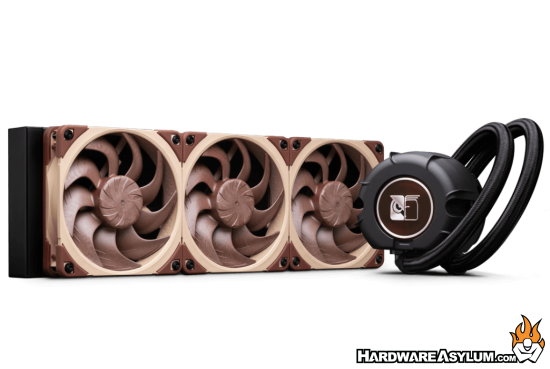
“The performance headroom of liquid cooling has always been tempting to us, but we first had to make sure that acoustics and reliability met the strict standards that customers expect from a Noctua product,” said Roland Mossig, CEO of Noctua. “With the NL-LC1, we are proud to have achieved a level of thermal performance, acoustic refinement and dependability that sets a new standard.”
The NL-LC1 series is based on Asetek’s renowned, premium-grade Emma V2 platform, which has established itself as a gold standard for both thermal efficiency and long-term dependability. What makes the NL-LC1 coolers unique is Noctua’s custom-engineered NL-PNA1 pump noise absorber: Leveraging a three-layer acoustic soundproofing structure and the tuned-mass damper effect, the NL-PNA1 reduces both air-borne noise and structure-borne vibrations, which can yield significant improvements in pump acoustics.
For fine-tuning performance-to-noise characteristics, the NL-LC1 series pump integrates a mode switch that allows users to choose between three different pump speed profiles: While the pre-selected quiet mode guarantees that the pump will stay near-inaudible, the balanced mode provides extra performance headroom, and the manual mode gives users full control over the pump’s entire RPM range.
Available in 240 (NL-LC1-24), 360 (NL-LC1-36) and 420mm (NL-LC1-42) form factors, the NL-LC1 coolers utilise Noctua’s award-winning NF-A12x25 G2 and NF-A14x25 G2 fans for cutting edge performance-to-noise efficiency. Working in tandem with the pump noise absorber, the G2 flagship fans are the second key factor to the NL-LC1 series’ unique capability of delivering first-rate thermals while running extremely quiet. To ensure a smooth, unobtrusive sound signature, the fans utilise a speed-offset to avoid undesirable harmonics phenomena such as periodic humming or vibration build-up due to beat frequencies.
While the NL-PNA1 pump noise absorber comes with a magnetically attaching metal faceplate, users who require extra ventilation for VRMs, RAM modules, M.2 SSDs or other near-socket components have the option of replacing it with the NL-ACF1 auxiliary cooling fan that is available separately.
Noctua’s proven SecuFirm2+™ mounting system not only enables easy installation, broad socket support and future upgradability, but also helps to improve thermal performance through optimised force transfer and offset mounting options.
Topped off with the renowned NT-H2 thermal paste and Noctua’s usual 6-year manufacturer’s warranty, the NL-LC1 are a deluxe choice for customers who are looking for premium grade all-in-one liquid coolers that satisfy the highest demands in terms of performance, reliability and quietness of operation.
Availability
The NL-LC1 series coolers and the NL-ACF1 auxiliary fan are available as of today via Noctua’s official Amazon stores. Other sales partners will receive stock shortly.
-
Cooler Master Launches Q300L V3 Compact mATX Case
Published: Tuesday, June 16, 2026 | By: DennisUpdated Chassis Brings Improved Airflow, Stronger Structure, Tempered Glass, and Modern Connectivity
Los Angeles, California – June 15, 2026 – Cooler Master, a global leader in innovative thermal solutions and PC hardware today announced Q300L V3, the next generation of its popular compact mATX case platform. Designed for first-time builders, price-conscious gamers, and system integrators, the Q300L V3 delivers a more capable build experience with improved airflow, stronger structure, tempered glass, and updated front I/O connectivity.
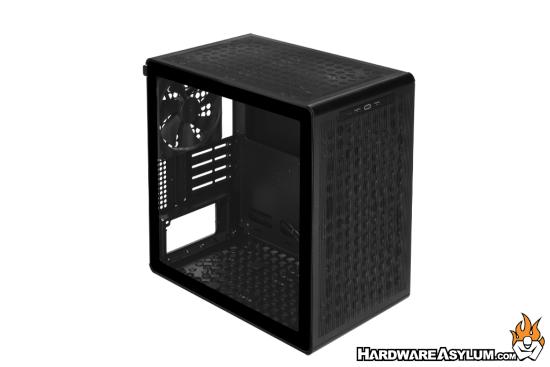
The Q300L V3 builds on the familiar identity of the Q300L series while addressing the needs of modern compact systems. With support for Mini-ITX and Micro-ATX motherboards, CPU air coolers up to 178 mm tall, graphics cards up to 366 mm long, and up to six fans, the case gives builders more room to work while keeping the small footprint that made the series popular.
Airflow is a major focus of the updated design. Enlarged front-panel perforations help increase intake potential, while support for a 140 mm rear exhaust fan gives builders more flexibility when tuning system cooling. The case also provides room for CPU air coolers up to 178 mm tall, expanding cooler compatibility in a compact chassis.
Cooler Master also improved the chassis structure for a more reliable building experience. Reinforced fan mounts, an upgraded motherboard tray, and a tempered glass side panel help the Q300L V3 feel more solid and refined than previous generations. For system integrators and high-volume builders, those improvements help support cleaner assembly, more consistent results, and a stronger finished system.
A modern front I/O gives the case a practical update for today’s users. The I/O ports include 3 USB 3.2 Gen 2x2 Type-C, dual USB 3.2 Gen 1 Type-A, and a combo audio jack, giving builders convenient access to high-speed connectivity without complicating the case layout.
Key Features
- Compact mATX Platform - Supports Mini-ITX and Micro-ATX motherboards in a compact footprint designed for desks, dorms, gaming setups, and system integrator builds.
- Improved Airflow Potential - Enlarged front-panel perforations, support for up to six fans, and 140 mm rear exhaust compatibility help improve cooling options for modern components.
- Room for Modern Hardware - Supports CPU air coolers up to 178 mm tall and graphics cards up to 366 mm long, giving builders more flexibility in a smaller case.
- Stronger Chassis Structure - Reinforced fan mounts, an upgraded motherboard tray, and a tempered glass side panel create a more stable, refined build experience.
- Updated Front I/O - Includes 3 USB 3.2 Gen 2x2 Type-C, dual USB 3.2 Gen 1 Type-A, and a combo audio jack for modern connectivity.
QUBE 340 Alternative - The QUBE 340 adds optional handles, vertical or horizontal orientation, flexible front I/O placement, and front accessory mounting support for users who want more modularity.
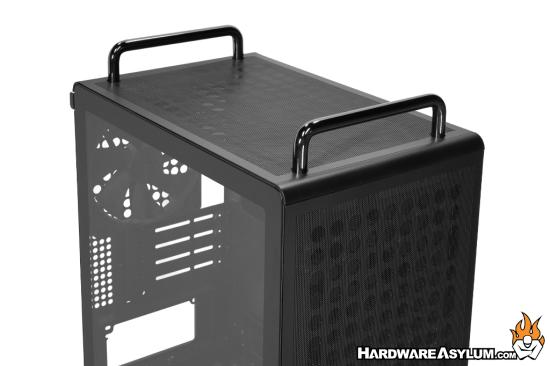
For users who want more customization, Cooler Master will also offer the QUBE 340, a modular companion version built on the same core platform. The QUBE 340 adds optional handles, vertical or horizontal orientation, flexible front I/O placement, and front mounting support for compatible 3D-printable accessories. It brings the modular spirit of the QUBE family to the same compact mATX foundation, giving builders a more expressive alternative to the streamlined Q300L V3.
Together, the Q300L V3 and QUBE 340 give builders two ways to approach the same improved compact case platform. The Q300L V3 offers a clean, accessible upgrade for mainstream mATX builds, while the QUBE 340 adds more flexibility for users who want a case that can adapt to their setup, space, and style.
-
CORSAIR Expands Its Gaming Ecosystem at Computex 2026 with Advanced Hall Effect Technology, Stream Deck-Integrated Performance, and All-Day Audio
Published: Tuesday, June 2, 2026 | By: EddieCLIPPER PRO MINI 60, NIGHTSWORD v2 WIRELESS SD, HS35 v3 WIRELESS, and HS35 v3 give competitive gamers, creators, and everyday players smarter inputs, deeper control, and immersive audio for all their various needs.
CORSAIR® (Nasdaq: CRSR), a leading global developer and manufacturer of high-performance gear and technology for gamers, content creators, and PC enthusiasts, today unveiled four new gaming peripherals at Computex 2026. The CLIPPER PRO MINI 60 Hall Effect Gaming Keyboard, the NIGHTSWORD v2 WIRELESS SD Stream Deck Gaming Mouse, the HS35 v3 WIRELESS Gaming Headset, and the HS35 v3 Gaming Headset. These products are all adaptable and able to change with players' needs, giving them different avenues of control, customization, and comfort to experiment with.
“Competitive gamers traditionally gravitate toward smaller keyboards, and we wanted to deliver a more full-size and feature rich experience for 60% keyboard lovers,” said Tobias Brinkmann, SVP and GM of Gaming at CORSAIR. “The CLIPPER PRO MINI 60 comes with defining, new Hall Effect customization features like Multi Action, Tap Lock, and Smart Tap. The Stream Deck enabled NIGHTSWORD v2 WIRELESS SD and the feature-packed HS35 v3 headset are also launching, reflecting CORSAIR’s commitment to building gear that grows with its players, delivering control and versatility that opens new ways to play, create, and perform.”
CLIPPER PRO MINI 60 Hall Effect Gaming Keyboard
Built for competitive gamers who rely on speed and responsiveness, the CLIPPER PRO MINI 60 packs advanced Hall Effect performance into a 60% layout that clears the desk for wide mouse sweeps and unrestricted movement. It brings together a new generation of Hall Effect features and the raw competitive speed of Rapid Trigger and FlashTap SOCD in a compact, portable build.
The CLIPPER PRO MINI 60 excels at its small size due to the suite of Hall Effect switch features, giving users the full command range of a larger board.
- Multi Action maps up to four distinct actions to a single key across its press and release travel, condensing multi-step combos or ability chains into one precise movement.
- Tap Lock turns long-held actions like crouch or throttle into effortless toggles, keeping fingers free for faster inputs elsewhere.
- Smart Tap assigns separate actions to a quick tap versus a held press on any key, making it straightforward to restore arrow keys, function shortcuts, or custom in-game binds to the compact layout without reaching for FN combinations.
- CORSAIR MGX HYPERDRIVE CORE magnetic switches drive the powerful new features. As the first CORSAIR keyboard with these new switches, players will enjoy adjustable actuation from 0.2mm to 3.8mm with consistent performance across 100 million keystrokes. A square stem structure reduces wobble for crisper switch feel and more precise actuation.
Speed and reaction time are key, and CORSAIR Rapid Trigger eliminates the fixed reset point found on standard mechanical keyboards. This enables the switch to re-actuate after as little as 0.1mm of upward travel, critical for rapid-fire taps, counter-strafing, or any situation where the gap between your last move and your next one needs to disappear. FlashTap SOCD handling puts you in control of how opposing directional inputs resolve, delivering clean, consistent movement for jiggle peeking, rapid turning, and the kind of mechanical precision competitive FPS games demand. This is all run on CORSAIR AXON 8,000Hz hyper-polling technology, registering inputs up to 8x faster than standard gaming keyboards.
The CLIPPER PRO MINI 60 carries an IP57 rating* for water and dust resistance and dual-layer sound dampening for clean typing acoustics. Customize everything through CORSAIR Web Hub, a browser-based utility that requires no software installation. Adjust Hall Effect settings, map keys, build RGB profiles, download firmware updates, and save up to five onboard profiles through an intuitive interface. The included detachable USB-C cable supports play on PC, Mac, Xbox, and PlayStation.
CORSAIR is also bringing its advanced Hall Effect toolkit to the VANGUARD PRO 96 via a software update, expanding their latest performance innovations across their ever-growing magnetic keyboard lineup.
*Recommended to wait a minimum of 72 hours after submerging before normal use. Drying time may vary depending on environmental conditions.
NIGHTSWORD v2 WIRELESS SD Stream Deck Gaming Mouse
The NIGHTSWORD v2 WIRELESS SD is the first mouse that features a dedicated Stream Deck Launch Button. It is the latest step in CORSAIR’s push to integrate Stream Deck control deeper into gaming products, giving users a level of on-the-fly versatility that transforms the mouse into a fully configurable command center.
One press of the Stream Deck Launch Button summons an Elgato Virtual Stream Deck overlay directly on-screen, built around whatever game or genre you are playing. Set up profiles for easy ability chains, inventory shortcuts, media controls, and more. Virtual Stream Decks can be triggered from 8 programmable buttons on the NIGHTSWORD v2 WIRELESS SD, and you can natively map functions to the mouse with the Stream Deck app. The power of the Elgato Marketplace extends its functionality further with plugins for OBS, Discord, Spotify, and more so you can select brush sizes, adjust streaming tools, or anything else required for all the apps in your daily life.
Under that control layer sits a mouse built to compete and win. 8,000Hz hyper-polling in both wired and wireless modes ensure near-instantaneous input delivery to provide players with an edge in speed. The CORSAIR MARKSMAN S sensor delivers up to 33,000 DPI tracking with 99.7% resolution accuracy, 750 IPS tracking speed, and 50G acceleration. Optical switches register with zero debounce delay, and they’re rated for up to 100 million clicks for exceptional reliability.
An ergonomic right-hand shape with a contoured thumb rest provides secure, natural grip through extended sessions. Battery life reaches up to 170 hours*, and the included wireless adapter allows the user to position the receiver closer to the mouse for a stronger, more reliable signal.
Connect via 2.4GHz SLIPSTREAM WIRELESS, Bluetooth®, or wired USB-C. Map buttons, set macros, adjust DPI, and control lighting through CORSAIR Web Hub with no software installation required.
*Up to 170 hours of battery life via 2.4GHz with RGB off using 1kHz polling; up to 164 hours via Bluetooth® with RGB off.
HS35 v3 WIRELESS Gaming Headset
The HS35 v3 WIRELESS Gaming Headset delivers immersive audio and broad platform support in one attractive package. Dolby Atmos Spatial Audio* on custom-tuned 50mm neodymium drivers pull you deeper into the game, adding directional depth to every sound so footsteps, gunshots, and environmental cues land exactly where they should.
Users can connect via 2.4GHz wireless, Bluetooth®, or the included wired cable for use on PC, Mac, PlayStation, Nintendo Switch, mobile, and more. The ability to switch between connections and platforms without interrupting audio, means the same headset handles ranked sessions on PC, couch play on console, or mobile gaming on the train, all on a 30hr battery life.
A redesigned adjustable floating headband and breathable soft fabric earcups keep the headset comfortable through long play sessions. At 250g, it stays light enough to wear all day without fatigue or overheating. Up to 30 hours of battery life at 50% volume keep players and their ears in the game. The detachable omnidirectional microphone provides crisp comms, and convenient, earcup-mounted volume and mic mute controls keep players focused on their gameplay.
*Dolby Atmos® available on PC only. Requires Dolby Access app.
HS35 v3 Gaming Headset
The HS35 v3 Gaming Headset brings the same custom-tuned 50mm neodymium drivers and redesigned comfort of the wireless model through a universal 3.5mm wired connection. Plug into any PC, Mac, PlayStation, Nintendo Switch, or mobile device and get immersive audio immediately, with no setup required.
The adjustable floating headband and soft fabric earcups deliver the same long-session comfort as the wireless version, but with an even lighter 230g weight. An omnidirectional boom microphone enables clear communication, with earcup-mounted controls for volume and mic mute. The HS35 v3 is built for players who want quality audio and wide platform support in a straightforward, always-ready package.
The CLIPPER PRO MINI 60, NIGHTSWORD v2 WIRELESS SD, HS35 v3 Wireless, and HS35 v3 will be on display for invited members of the media during Computex 2026. To secure an invitation to get a first look at the new CORSAIR gear, please contact your local PR representative listed below.
-
Lexar Eyes Next-Generation AI Solutions with ASUS Collaboration on Mini PCs, Handheld Gaming and High-Performance Gaming Memory at COMPUTEX 2026
Published: Monday, June 1, 2026 | By: EddieLexar showcases its full-stack AI storage capabilities – spanning AI PCs, compact edge systems, and high-performance gaming platforms.
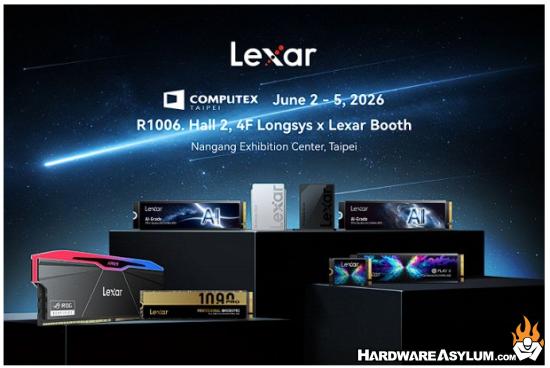
Lexar, a leading global brand in memory and storage solutions, will unveil a key collaboration with ASUS at COMPUTEX 2026 that will showcase the company’s advanced capabilities as the world of AI dramatically increases memory and storage demands.
“As AI workloads move from the cloud to local devices, storage is becoming more than passive capacity,” said Lexar Chief Technology Officer Daniel Guo. “It is becoming a critical part of how AI systems load models, move data, reduce latency, and maintain sustained performance.”
For AI PC exploration, Lexar will present an AI-grade Gen4 SSD model with the ASUS NUC 15 Pro Mini PC, demonstrating how AI-aware storage technologies may support compact AI PC environments. Lexar and ASUS will continue technical discussions to explore future AI storage formats, including AI-grade Storage Stick concepts, which will provide more flexible expansion possibilities.
Additionally, Lexar and ASUS will exhibit examples of collaboration across gaming handhelds and PC gaming. For handheld gaming, Lexar will showcase PLAY X PCIe 4.0 M.2 NVMe SSD alongside the ASUS ROG XBOX ALLY, highlighting the PLAY X SSD’s compatibility and performance advantages in compact gaming systems. The PLAY X SSD supports both M.2 2230 and M.2 2280 configurations, delivers speeds up to 7400MB/s read and 6500MB/s write, and is now available in Europe and MEAI markets.
Lexar will display ARES RGB DDR5 ROG Certified memory, developed in collaboration with ASUS ROG motherboards, further expanding the cooperation between Lexar and ASUS across gaming and high-performance PC ecosystems.
AI Technology Solution: Advancing AI-Grade Gen5 Controller and Intelligent Scheduling Technologies
At the center of AI Storage Core is Lexar’s integrated hardware-software solution along with parent company Longsys’ self-developed Gen5 controller SPU (Storage Processing Unit) and Intelligent Scheduling technologies.
Built on an advanced 5nm process with a DRAM-less architecture, the SPU is designed to improve supply stability while maintaining high-performance AI storage capabilities in today’s constrained DRAM environment.
Lexar’s Intelligent Scheduling engine is specifically designed to optimize edge AI inference. It addresses challenges that can hinder inference performance such as large Multi-Objective Models (MoE), substantial parameter sizes, rapidly growing Key-Value (KV) Cache, and I/O latency. By employing intelligent workload scheduling, predictive prefetch algorithms, and optimized cache management, the platform significantly enhances AI storage efficiency. Additionally, it reduces the required DRAM capacity by approximately 40%.
Together, chip hardware and Intelligent Scheduling allow storage to play a more active role in local AI performance, rather than simply serving as a place to store data.
AI Product Portfolio: High-Performance Storage Solutions for AI Devices
Building on its AI Storage Core capabilities, Lexar will showcase a range of high-performance storage solutions designed to support AI PCs, creator workflows, and compact edge devices.
Lexar will showcase its next-generation AI-grade Gen5 SSD and AI-grade Gen5 Storage Stick concepts, designed to deliver bandwidth up to 11GB/s and provide a more flexible storage expansion path for compact AI devices. By combining high-bandwidth Gen5 performance with compact and adaptable form factors, these concepts aim to support future edge AI devices that require larger local model storage, faster model switching, lower-latency data access, and sustained performance within limited power and thermal environments.
The NM1090 PRO 8TB PCIe Gen5 SSD is designed for AI PCs, creators, and users who need both greater capacity and high bandwidth. Powered by PCIe Gen5 x4, it delivers read/write speeds up to 14,400MB/s and 13,400MB/s, with capacity up to 8TB, supporting large local AI models, high-resolution creative assets, and multiple AI applications running simultaneously on-device.
Lexar will also display ARES RGB DDR5 Desktop Memory 128GB (64GBx2) 6400 C32 / 6000 C32, engineered for AI PCs and high-performance computing environments. Featuring high capacity and exceptional bandwidth, ARES RGB DDR5 Memory helps support efficient local AI model deployment, generative AI workloads, creative production, gaming multitasking, delivering a more capable memory foundation for AI PC experiences.
Backed by more than 30 years of storage expertise and Longsys’ capabilities across controller design, firmware, advanced packaging, manufacturing, and validation, Lexar continues to expand beyond traditional storage products toward AI-aware storage solutions for the next generation of edge computing.
Lexar welcomes media, partners, and industry visitors to explore its latest AI storage and high-performance memory solutions at COMPUTEX 2026 from June 2–5 at Booth No. R1006, Hall 2, 4F, Taipei Nangang Exhibition Center.
-
TEAMGROUP Shows T-CREATE most popular product lines at at COMPUTEX 2026
Published: Thursday, June 4, 2026 | By: EddieTaipei_ T-CREATE, TEAMGROUP’s creator brand known for high-capacity and highly stable solutions, will spotlight cutting-edge technologies tailored for generative AI, high-performance computing, and professional content creation. Key highlights include the award-winning T-CREATE EXPERT P35S External SSD (One-Click Data Destruction), recipient of the COMPUTEX 2026 Best Choice Award and multiple prestigious international honors. The groundbreaking solutions highlight TEAMGROUP’s innovation momentum and technological leadership on the global stage.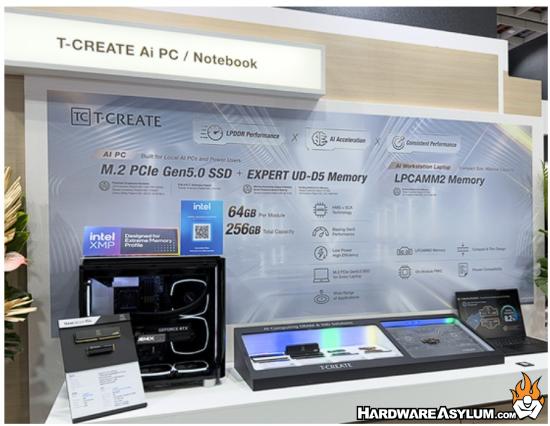
- The T-CREATE EXPERT AI LPCAMM2 Memory features a replaceable LPCAMM2 module design, delivering a flexible and upgradeable memory architecture for next-generation workstation laptops. Supporting up to 64GB per module, it delivers transfer speeds of up to 8533 MT/s while operating at a low voltage of just 1.05V. The module also incorporates TEAMGROUP’s patented graphene cooling technology to ensure stable operation during extended use. Designed for evolving AI computing and professional creative applications, the T-CREATE EXPERT AI LPCAMM2 provides an ideal combination of high performance, low power consumption, and modular memory expandability.
- The T-CREATE EXPERT AI 4R CUDIMM Desktop Memory adopts a 4-Rank CUDIMM architecture, supporting an ultra-high capacity of up to 128GB per module and enabling easy expansion to 256GB with two slots. Designed to meet the intensive demands of AI development, advanced visual content creation, and data-intensive computing, it provides the memory capacity required for complex professional workloads. The module offers specifications of up to 8000 MT/s at 1.1V. It also features an exclusive perforated convection cooling design for enhanced thermal dissipation and ensuring long-term stability under high workloads. Purpose-built for professional creators, the T-CREATE EXPERT AI 4R CUDIMM showcases T-CREATE’s design expertise in delivering high-performance memory solutions tailored for next-generation applications.
- The T-CREATE MASTER Ai I6E E1.S PCIe 6.0 SSD is built on the latest PCIe 6.0 interface and E1.S modular form factor, delivering sequential read speeds of up to 28 GB/s. Designed for AI training, large-scale inference, and high-performance computing workloads, the I6E combines ultra-low latency with exceptional power efficiency, enabling top-tier performance while helping reduce overall power consumption and carbon emissions. It brings together high-performance computing, sustainability, and stable performance for creative workflows, accelerating the evolution of high-performance storage in the AI era.
- The T-CREATE EXPERT P33 External SSD features an innovative integrated E-Ink display, allowing key information such as capacity, drive health, and project names to remain visible even when powered off. Users can also customize drive names and category labels, making it easy to quickly identify stored content without connecting the SSD to a device. Designed with a refined matte silver finish, the P33 seamlessly blends smart display functionality with minimalist aesthetics, delivering an intuitive and efficient storage experience tailored for creators.
- The T-CREATE EXPERT P35SG External SSD (Wireless One-Click Data Destruction) integrates a dual one-click data destruction mechanism, combining a local physical button with remote wireless control[2]. In emergency situations, users can remotely trigger the confidential data destruction process even when away from the device, enabling immediate action to safeguard sensitive information. The P35SG further enhances data security with TEAMGROUP’s proprietary destruction trigger notification mechanism, providing real-time status updates for users to instantly verify destruction progress with confidence. By combining greater control, reliability, and peace of mind, the P35SG offers a smarter, more comprehensive mobile data security solution for business and professional users.
-
G.SKILL Demos Trident Z5 NeoX RGB Series DDR5 with AMD EXPO™ Technology: Featuring Ultra Low Latency at Computex 2026
Published: Thursday, June 4, 2026 | By: EddieG.SKILL International Enterprise Co., Ltd., the world's leading brand of performance overclock memory, is thrilled to showcase a new DDR5 memory series – Trident Z5 NeoX RGB – with support for "AMD EXPO™ Technology: Featuring Ultra Low Latency" and specification ranging from DDR5-6000 CL36 to DDR5-6000 CL26. This new DDR5 memory series feature enhanced low latency performance, supported by the latest major update of AMD EXPO memory overclocking profile, which aims to provide PC enthusiasts more PC performance through additional low latency timing support.
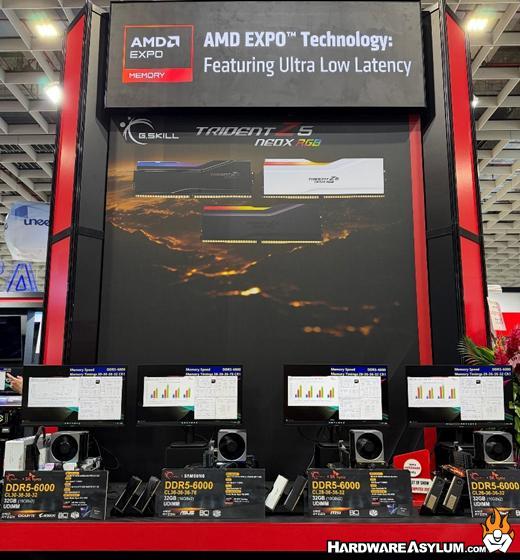
AMD EXPO™ Technology: Featuring Ultra Low Latency
"AMD EXPO™ Technology: Featuring Ultra Low Latency" is the newly announced memory overclocking technology released by AMD. Compared to existing G.SKILL DDR5 memory kits that includes AMD EXPO support, the new Trident Z5 NeoX RGB series come with AMD EXPO ™ ULL that includes several new memory sub-timing settings, which helps deliver better latency performance at the same memory speed and CL timing, especially with non-X3D AMD desktop processors. PC enthusiasts can experience the enhanced performance by simply enabling the AMD EXPO profile on compatible motherboards with supported BIOS versions.
Close Product Development Partnership with AMD
The AMD EXPO ™ ULL and Trident Z5 NeoX RGB series DDR5 memory kit demonstrates the strong partnership between AMD and G.SKILL, and our commitment to continuously develop cutting edge performance products for the overclocking community.
“With AMD EXPO™ Technology featuring Ultra Low Latency, we’re continuing to push the boundaries of memory performance for gamers and PC enthusiasts,” said David McAfee, corporate vice president and general manager, Client Channel and Graphics Business, AMD. “Through our deep collaboration with G.SKILL, we’re delivering high-performance memory overclocking profiles optimized for AMD platforms, giving users an easy path to enhanced performance with certified compatibility and reliability.”
Introducing Trident Z5 NeoX RGB Series
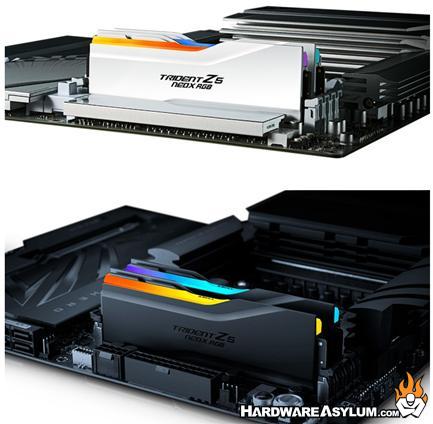
The G.SKILL Trident Z5 NeoX RGB series DDR5 memory is the upgraded version of the current Trident Z5 Neo RGB series, featuring support for AMD EXPO™ ULL. Both series will co-exist concurrently, where new Trident Z5 NeoX RGB will have select specifications that include the updated low latency support. This new series will be available in 3 colors: mirrored black, matte black, and matte white. It's the ideal memory solution for gaming enthusiasts for building a sleek and ultra-high performance PC.
Specifications & Availability
At Computex 2026, G.SKILL showcased 4 different Trident Z5 NeoX RGB specifications in 32GB (2x16GB) kit capacity, including DDR5-6000 CL36, DDR5-6000 CL30, DDR5-6000 CL28, and DDR5-6000 CL26. All of these kits have been validated under G.SKILL's suite of internal stress tests across different motherboards, enabling outstanding performance and maintaining platform compatibility.
"G.SKILL is very excited to be one of the launch partners of the AMD EXPO™ Technology: Featuring Ultra Low Latency," said Tequila Huang, Vice President at G.SKILL. "This reflects our commitment to continuously develop high performance hardware for worldwide overclockers and PC enthusiasts, and was made possible through the amazing support and collaboration with AMD."
Please refer to the table below for more specification details. The specifications are subject to change before actual product retail release.
Overclocking and/or Undervolting AMD processors and memory, including without limitation, altering clock frequencies / multipliers or memory timing / voltage, to operate outside of AMD’s published specifications will void any applicable AMD product warranty, even when enabled via AMD hardware and/or software. This may also void warranties offered by the system manufacturer or retailer. Users assume all risks and liabilities that may arise out of overclocking / undervolting AMD processors, including, without limitation, failure of or damage to hardware, reduced system performance and/or data loss, corruption or vulnerability. GD-106.
-
BenQ Unveils AI-Driven Innovations Across Work, Education, and Lifestyle at COMPUTEX 2026
Published: Tuesday, June 2, 2026 | By: DennisIntegrated Hardware and Software Solutions Deliver Smarter, More Immersive Experiences
TAIPEI, Taiwan, June 3, 2026 – Global display technology leader BenQ Corporation is showcasing its latest AI innovations at COMPUTEX 2026 under the theme ”AI In Action,” creating immersive and interactive experiences that demonstrate how AI-enhanced visual technologies can support smarter everyday experiences.
Across smart meeting, smart education, and smart living scenarios, BenQ presents AI-enabled display solutions powered by AI, cloud technologies, and integrated hardware-software systems, demonstrating use cases from efficiency enhancement to enriched interaction.
“AI is rapidly reshaping how people interact with technology, while demand for efficiency and real-time decision-making continues to grow. BenQ is deepening the integration of AI and display technologies across smart meeting, education, and living scenarios, making everyday experiences more intuitive, efficient, and user-centered.” said Peter Huang, President of BenQ Corporation.
Optimizing the Entire Meeting Process for Smarter Enterprise Collaboration
Centered on AI-powered smart meetings, BenQ is showcasing an integrated enterprise collaboration solution. The solution combines the CP Series interactive displays with leading video conferencing platforms and connected technologies. With BenQ’s cloud-based Account Management System (AMS) and NFC / QR Code quick login, users can instantly sync their personal settings and meeting materials, streamlining pre-meeting setup and improving cross-device collaboration efficiency.During meetings, AI gesture control and content analysis help streamline presentations and information access. After meetings, the system can automatically generate meeting summaries and action items to help teams make decisions faster and execute more efficiently. Powered by MediaTek’s latest AI chipsets, the solution delivers up to a 176% improvement in AI computing performance under AI meeting generation testing scenarios compared to the previous generation. As a result, the time required to generate AI meeting summaries and action items can be reduced from five minutes to three minutes. The flagship BenQ Board CP05, winner of a 2026 Red Dot Design Award and ENERGY STAR certified, features a magnetic pen design and NFC quick login to enhance ease of use and collaboration while supporting energy efficiency and sustainable design.
Connecting Teaching and Learning Management for Smarter Education
For smart education environments, BenQ is highlighting AI-powered teaching as the foundation of its integrated smart classroom solution. The solution brings together projectors, interactive displays, and smart conferencing cameras, supported by cloud platforms and AIoT technologies to create a connected hardware-software ecosystem for modern learning environments. Through cloud systems including AMS, DMS, and X-Sign, teachers and administrators can efficiently manage teaching materials and classroom devices, enabling instant access to learning resources and cross-device management.In classroom applications, AI handwriting recognition, Optical Character Recognition (OCR) ,Text-to-Speech (TTS), smart Q&A, and real-time search help enhance interactive teaching experiences and student engagement. According to BenQ internal testing, overall teaching efficiency can improve by up to 20%. For example, AI can quickly generate classroom quizzes based on teaching materials, helping reduce lesson preparation and question design time. Teachers can also conduct real-time searches directly through AI-powered Q&A on the interactive display, minimizing classroom interruptions caused by switching devices or searching for information and helping maintain lesson flow and student engagement. The solution also uses environmental sensing technology to monitor air quality and classroom conditions in real time, helping create a smarter learning environment that supports teaching efficiency, easier management, health, and safety.
Expanding Sports and Entertainment Applications Through Immersive Projection and Interaction
In the smart lifestyle area, BenQ is showcasing an AI-powered immersive football experience featuring the LH860ST projector as part of its sports simulation solution. The experience uses sensing technology to track shot trajectories and AI-powered analysis to provide real-time directional guidance and performance feedback. Users can participate without wearable devices or additional sensors while receiving personalized training suggestions.The system features low-latency image processing and factory-calibrated white balance to ensure consistent color across multi-projector setups, meeting the needs of medium- and large-scale immersive venues. BenQ is also partnering with LE BLE D'OR during the exhibition to launch a limited-time Happy Hour activation. The company also plans to extend the AI football interactive experience into restaurants and sports viewing venues, combining sports events with immersive entertainment experiences to explore new commercial applications and usage scenarios.
Delivering Responsible Innovation Through User Experience and Environmental Sustainability
Across the three scenarios, BenQ incorporates health and sustainability-focused design tailored to the needs of each product category. Smart meeting and smart education display solutions emphasize visual comfort and protection, with eye-care and antibacterial features, as well as low blue light and mercury-free light sources to help reduce eye strain during extended use. In smart education settings, environmental sensing technology monitors air quality in real time to help create safer learning environments.For smart life applications, BenQ’s immersive projection solutions use housings made with up to 50% recycled plastic and modular designs that help extend product lifecycles and reduce resource consumption. Together with remote management, maintenance, and energy-saving design, these solutions improve energy efficiency and reduce environmental impact.
BenQ will continue to deepen the integration of AI with display technology, expand cross-scenario applications, and create more human-centric and intuitive experiences, and help drive the industry toward the next generation of AI applications.
-
Advancing AI Transformation Through Specialized Experiences and Human-Centric Innovation
Published: Tuesday, June 2, 2026 | By: DennisShowcasing how AI, digital transformation, and purpose-built solutions empower professionals across education, enterprise, creative, gaming, and immersive environments.
TAIPEI, Taiwan, June 3, 2026 — At COMPUTEX 2026, BenQ showcases how precision engineering, AI, and advanced visual technologies come together to enhance human performance in demanding professional environments.
Building on its expertise in display and visual solutions, BenQ continues to expand its portfolio with adaptive solutions that enhance how professionals think, create, collaborate, and perform in an increasingly connected world. From AI-enabled simulation projection systems to solutions for education and enterprise collaboration, as well as professional monitors designed for creators, esports professionals, engineers, and other specialized users, BenQ delivers technology that works seamlessly with people.
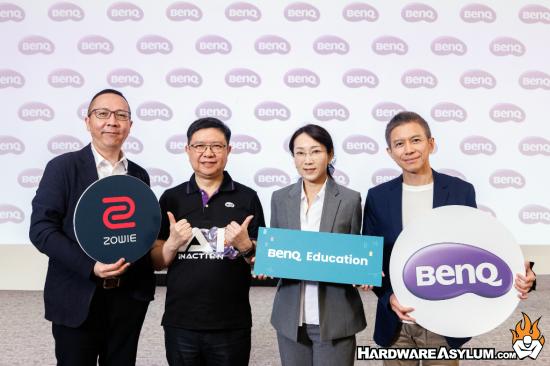
“We are entering a new phase where AI and digital transformation are reshaping how people work and perform,” said Peter Huang, President of BenQ Corporation. “At BenQ, our strategy is built on three pillars: accelerating AI and digital transformation, advancing diversification through market expansion and product specialization, and developing new growth engines for long-term sustainable growth. This year at COMPUTEX 2026, we demonstrate how these pillars come together to drive innovation that is purpose-built for professionals and unlocks new possibilities.”
Beyond Display: AI-Driven Ecosystem for Immersion and Efficiency
BenQ is expanding its AI strategy across computing, collaboration, and immersive experiences, building a full-stack ecosystem that enhances both performance and user engagement.At the core, BenQ’s smart meetings and smart education solutions leverage MediaTek NPU platforms to deliver up to a 176% improvement in AI computing performance under AI meeting generation scenarios. To accelerate software innovation, BenQ adopts an Agentic Coding approach in its engineering process. By utilizing Claude Code on Amazon Bedrock, development teams streamline engineering workflows and shorten development cycles, enabling faster deployment of new AI capabilities.
Meanwhile, features such as “Ask AI” and “SummarAI” enhance classroom and meeting efficiency. “Ask AI” supports natural language queries to provide instant answers and teaching suggestions, while “SummarAI” converts spoken content into structured summaries and key takeaways, helping users quickly capture important information.
Beyond productivity applications, BenQ extends AI into immersive physical environments that blend digital intelligence with real-world engagement. Demonstrating this vision, BenQ showcased an AI-powered immersive football simulation powered by its LH860ST projector. The solution combines sensing technology and AI analytics to provide real-time, non-wearable performance feedback and personalized training experiences. Designed for large-scale immersive installations, the system also delivers low-latency processing and precise color calibration, creating responsive and visually accurate interactive environments.
Engineering Precision: High-Stakes Performance for Professionals
BenQ continues to develop specialized display solutions engineered for the distinct needs of creators, gamers, and professional users. By combining color science, ergonomic engineering, AI-enhanced optimization, and scenario-driven design, BenQ delivers display technologies tailored for workflows that demand precision, responsiveness, and long-duration comfort.- BenQ Creative Pro PV3250U: This series is engineered for professional creators to unlock studio productivity. Featuring AQCOLOR technology, it ensures corner-to-corner uniformity and industry-standard compliance. Combined with AQCOLOR Pilot, the monitor helps maintain image consistency and elevates color accuracy for video and photo editing required for critical work.
- BenQ MOBIUZ EX271QMZ: A gaming monitor built for AAA gaming and high-speed performance. Featuring Game Art Color and AI-powered Smart Game Art detection, EX271QMZ intelligently optimizes visual settings based on different gaming art styles to enhance atmosphere, scene depth, and creator-intended immersion. Combined with true black contrast, ultra-fast response time, and vibrant color reproduction, the monitor delivers cinematic visual immersion alongside fluid gameplay performance.
Inside BenQ’s R&D Labs: Where Engineering Meets Human Insight
BenQ has opened its headquarters R&D labs to global audiences, offering a rare look into the science behind its product DNA. The labs demonstrate how BenQ integrates optical engineering, human factors research, biomechanics, and real-world scenario validation into its development process to create technologies designed around human performance and professional workflows.- The Color Fidelity Lab: The birthplace of AQCOLOR, demonstrating BenQ’s capability to achieve consistent color across different devices. It focuses on end-to-end color management to maintain color consistency throughout professional workflows.
- The Human & Machine Innovation Lab: The ZOWIE esports series originated from this lab. It integrates sports science into the product development of gaming mouse and mouse pads, combining biomechanics and data analysis for precise performance optimization.
The Smart Lighting Lab: The lab combines optical engineering, human factors research, and validation testing to develop human-centric lighting solutions. Its scientific approach emphasizes lighting that is measurable, repeatable, and optimized for real-world user comfort.
Together, these R&D capabilities reflect BenQ’s approach to innovation, where precision engineering, human insight, and applied science converge to enhance professional performance in real-world applications.
-
Back in Taiwan to Attend Computex 2026
Published: Monday, June 1, 2026 | By: DennisOne of the great parts of running a tech related website is attending trade shows to learn about new trends and see what hardware may soon be available. If you happen to follow my travels I afford myself two trips a year, CES or the Consumer Electronics Show in Las Vegas and Computex in Taiwan. CES is great because it is close to where I live and may of the vendors I work with are there or around the event in area hotels. Sadly, CES has very little to do with what I cover on Hardware Asylum and is where Computex tends to do much better.
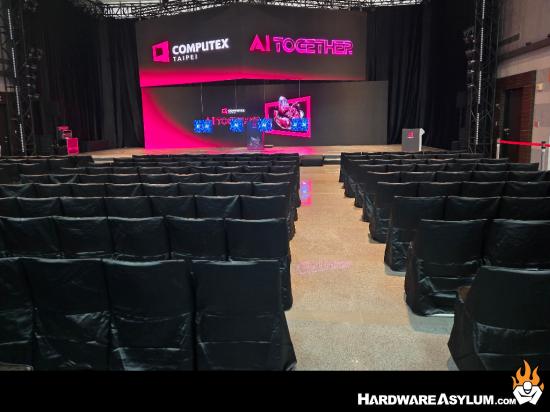
Computex started as a sales related trade show to attract international visitors looking to buy electronics hardware and services. The show was opened up to media to help promote the event and is where I got involved in the early 2000’s. Computex back then was a very different show, it felt small due to the location but was always packed with people. Since then the show has moved to larger facilities allowing vendors to expand the sizes of their booths and is when the show changed from a vendor and sales focus to marketing and presentation. The items are still there but, the purpose to attend is more about networking and making contacts over something a media person would report on.
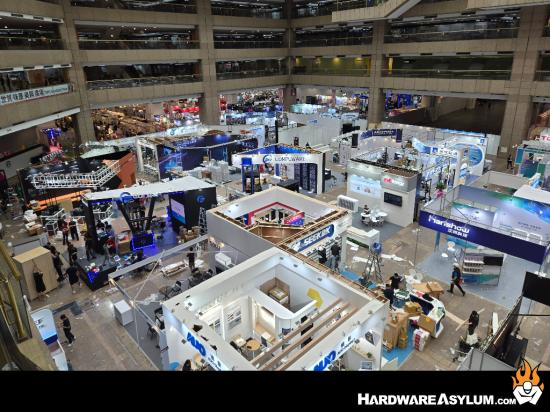
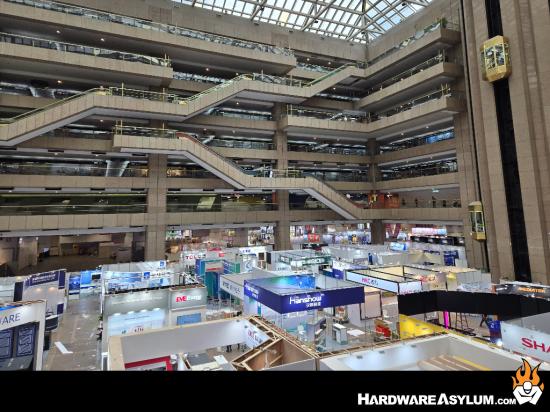
This year for Computex 2026 the show has expanded once again to encompass the two Nangang Exhibition buildings with additional exhibits at the World Trade Center. The Taiwan World Trade Center has been the host of Computex since I first started attending and brings back fond memories of shoulder to shoulder crowds and how you can quickly lose people when attempting to migrate the sea of people.

Sadly, the additional “halls” that were part of Computex have since been demolished to make way for new shopping centers and whatever this round skyscraper will eventually become. This location is one of the last buildings associated with Computex from when I first started visiting and is a reminder of how fast things change in the world of technology.
-
ASUSTOR’s All-Flash Storage Becomes the New Standard for Content Creation
Published: Sunday, May 31, 2026 | By: DennisLeading the industry, ASUSTOR was first to market in introducing an all-flash NAS using M.2 slots for NVMe SSDs to the consumer market. The Flashstor series not only breaks through the volume limitations of traditional NAS devices but also, with its high-speed networking and diverse interface design, has also successfully entered the professional application market demanding low noise and high performance.
TAIPEI, TAIWAN – 28 May 2026 – ASUSTOR Inc. has successfully pioneered the all-flash NAS design with its Flashstor series, bringing high-performance storage solutions into top-tier content creation studios. The Flashstor’s all-flash, zero noise, and zero-bottleneck design means NAS devices are no longer limited to a backend storage role but have transformed into a necessity for daily pro work. Addressing specific needs of various fields, ASUSTOR has precisely deployed a range of storage solutions with distinct specifications, ensuring high-quality data access that seamlessly integrates into environments that demand efficiency.
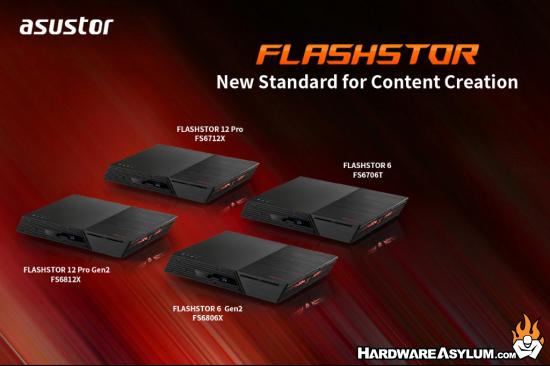
For those making music, ASUSTOR has specifically introduced corresponding audio output solutions within the Flashstor series, uniquely featuring S/PDIF optical output and HDMI ports to effectively and directly transmit digital audio signals to audio equipment. For advanced enthusiasts seeking a balance of high performance without breaking the bank, the Flashstor 6 offers high price-to-performance. In addition to Intel's powerful processor and dual 2.5-Gigabit Ethernet ports, which can be combined to double transmission performance through SMB Multichannel. The Flashstor 12 Pro caters to seasoned, top-tier audiophiles with extensive music collections, focusing on the ultimate balance of space and speed, providing up to 12 M.2 slots and 10GbE network ports. Instantly stream audio files by high-speed 10-Gigabit ports to audio equipment almost instantly, providing a technological foundation that underpins the series' high regard among audiophiles.
For higher-intensity professional creation and enterprise applications, such as large 3D projects or professional video production, the challenges often lie in read/write and network bandwidth bottlenecks. To fix this, ASUSTOR has released the Flashstor Gen2 series, built around a powerful processor. The Flashstor 6 Gen2 comes standard with 10GbE and USB4 ports, designed specifically for creators handling 4K and larger footage to enabling smooth real-time editing directly on the NAS. The flagship Flashstor 12 Pro Gen2 features dual 10GbE ports in addition to 12 M.2 slots for NVMe SSDs to fully unleash the transfer potential of M.2 SSDs. Even under high-pressure conditions such as intense video editing or multi-user collaboration, the Flashstor 12 Pro Gen2 maintains extremely low latency. This relentless pursuit of bandwidth and processing power is a consistent requirement among many professional video studios and tech enthusiasts and ASUSTOR makes it possible with the Flashstor series.
The ASUSTOR Flashstor series of NAS devices, through its commitment to the design philosophy of speed, silence, and simplicity, the Flashstor 12 Pro Gen2 provides professional content creators with the most solid storage backbone. Not only does it solve content creation requirements for space and noise, but it also provides unleashed performance for content creators. With the Flashstor series, professional storage is no longer just hardware hidden in a corner, but naturally integrates into modern studios and home audio-visual spaces, becoming an essential support for creativity and enjoying life.For more information, please visit: http://www.asustor.com